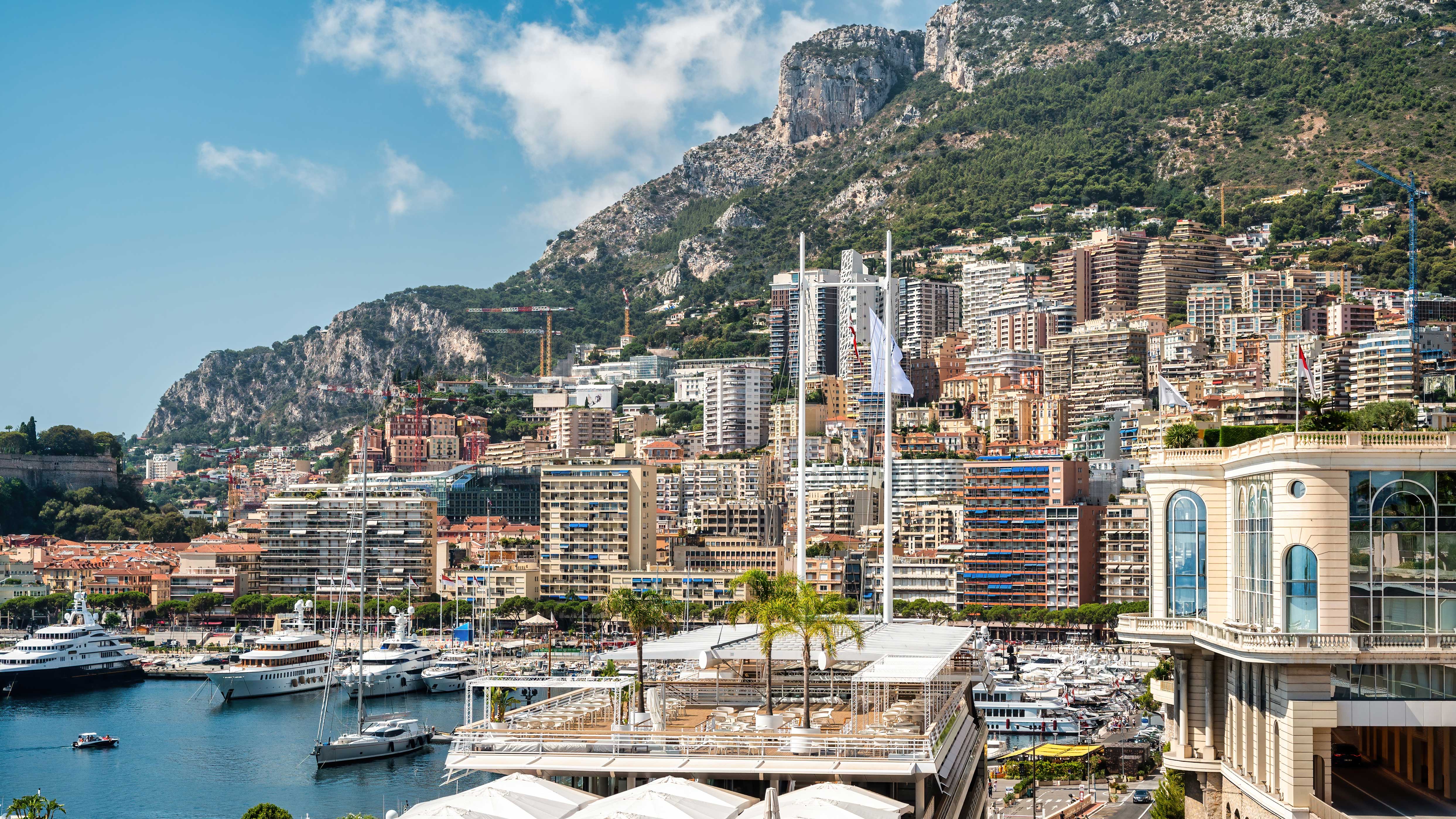
The Monaco Startup Ecosystem in 2026: A Practical Map for Founders
How Monaco's startup ecosystem actually works in 2026 — incubators, funding, legal structures and what to expect when building a digital business in Monaco.
Monaco is two square kilometres of state, but the startup ecosystem inside it is denser than most people expect. Founders moving here, or thinking about it, usually arrive with two questions: what support actually exists, and what is realistic to build from Monaco. This guide is for them. It maps the institutions, the funding channels, the legal shape of a Monaco company in 2026, and the trade-offs you should understand before you incorporate.
A small market, a long reach
The first thing to internalise: Monaco is not a domestic market. Roughly 39,000 residents, a high proportion of international clients, and an economy heavily tilted toward services, finance, real estate, hospitality and yachting. Building for "Monaco residents only" is a niche play. Building from Monaco to serve the Riviera, France, Italy and a global client base is the actual opportunity, and it is the model most successful digital businesses here follow.
A second point worth stating clearly: Monaco is not an EU member state. It is in the French VAT territory, uses the euro, and has bilateral arrangements with France on many practical matters, but EU directives — including consumer-protection rules and the GDPR — do not apply automatically. Monaco has its own data-protection regime under Law No. 1.565 of 3 December 2024, supervised by the APDP. Treat compliance as Monaco-specific, not as a French or EU copy-paste.
MonacoTech and the public-sector support layer
MonacoTech remains the central startup programme. It runs structured incubation tracks for early-stage companies, with desk space at 9 Rue du Gabian, mentorship, and introductions into the local network. Cohorts are selective and applications are evaluated periodically. If you are pre-seed and your product has a credible technology or innovation angle, this is the obvious first door to knock on.
Beyond MonacoTech, the Extended Monaco programme — the government's national digital initiative — continues to fund and coordinate work on AI, public services digitalisation and innovation partnerships. It is less directly a founder programme than a national framework, but it is the reason many of the public-sector RFPs and digital projects exist in the first place. Watching its publications gives you a useful read on where institutional spending is moving.
The Welcome Office at the Direction de l'Expansion Économique is the practical entry point for setting up. For digital founders specifically, expect to interact with MonGuichet.mc for procedures, and to spend real time on the authorisation steps that come before incorporation.
Funding: what's actually available
Monaco does not have a dense local VC scene in the way Paris or London does. What it does have is:
- Business angels and family offices. Many Monaco residents and family offices invest privately. Access is relationship-driven, not pitch-deck-driven, and warm introductions matter more than they would in a larger market.
- MonacoTech network capital. Cohort companies routinely raise from investors connected through the programme. The incubator itself is not a fund, but the network is.
- French and European investors. Geographically you are forty minutes from Nice and a short flight from Paris, Milan and London. Many Monaco-based startups raise from French funds and operate cross-border.
- Public co-financing. The Fonds Bleu mechanism supports certain digital-transformation projects for Monaco businesses. If your build qualifies, it can meaningfully reduce the cost of a website, e-commerce platform or internal tool. See our overview of Fonds Bleu subsidised website projects.
The honest summary: you will not raise an institutional seed round in Monaco simply because you incorporated here. You can absolutely raise from Monaco-connected capital if your business and your network warrant it.
Choosing a legal structure
The two structures most digital founders consider are the SARL (société à responsabilité limitée) and the SAM (société anonyme monégasque). SARLs are lighter to set up and adequate for most small operating businesses. SAMs are heavier, with higher capital requirements and government approval, and are typically used where the activity is regulated or where the scale and shareholder structure justify it. There is also the option of operating as a sole trader (entreprise individuelle) for very early or solo activity.
Rules and thresholds change. Do not rely on a blog post — including this one — for the structural decision. Talk to a Monaco-licensed accountant or lawyer before you commit.
Tax, residency and the boring parts that matter
Monaco's tax profile is the reason many founders look here in the first place. The headline points: no personal income tax for most residents (French nationals are a specific case under the 1963 bilateral convention), no wealth tax, and a corporate profits tax (ISB) that applies to companies generating more than 25% of their turnover outside Monaco, currently at 25%. Digital businesses serving an international client base will frequently fall inside ISB.
Residency for the founder is a separate process from incorporation and has its own minimum-stay and housing requirements. Plan both timelines together — they interact in ways that surprise people who only planned for the company side.
What a digital startup actually needs from day one
Independent of the institutional layer, there is a practical operating stack every founder ends up assembling:
- A multilingual website that works for at least French and English audiences, and ideally Italian. See our multilingual website guide and the realities of website costs in Monaco.
- A clear position on data protection under Law 1.565, including cookie consent and any APDP notifications your processing requires.
- A go-to-market mix appropriate to your audience. For most Monaco-facing digital businesses that means SEO, Google Ads and disciplined social media rather than broadcast spend.
- A payments and e-commerce setup that actually works in Monaco — providers and rates behave differently here than in France. Our piece on e-commerce payments in Monaco goes deeper.
The realistic founder timeline
A common path looks like this: arrive, take temporary housing, apply for residency, scope the business with a Monaco accountant, decide on structure, incorporate, build the operating stack, then run six to twelve months of focused commercial development before raising or scaling. Founders who try to compress all of that into ninety days usually pay for it in either compliance gaps or wasted spend.
Monaco rewards founders who treat it as a serious operating base, not a flag. The ecosystem is real, the support exists, and the constraints are well-defined — they just need to be understood before you commit.
If you are setting up a digital business in Monaco and want help mapping the website, e-commerce and marketing layer onto your structure, get in touch.
Related services