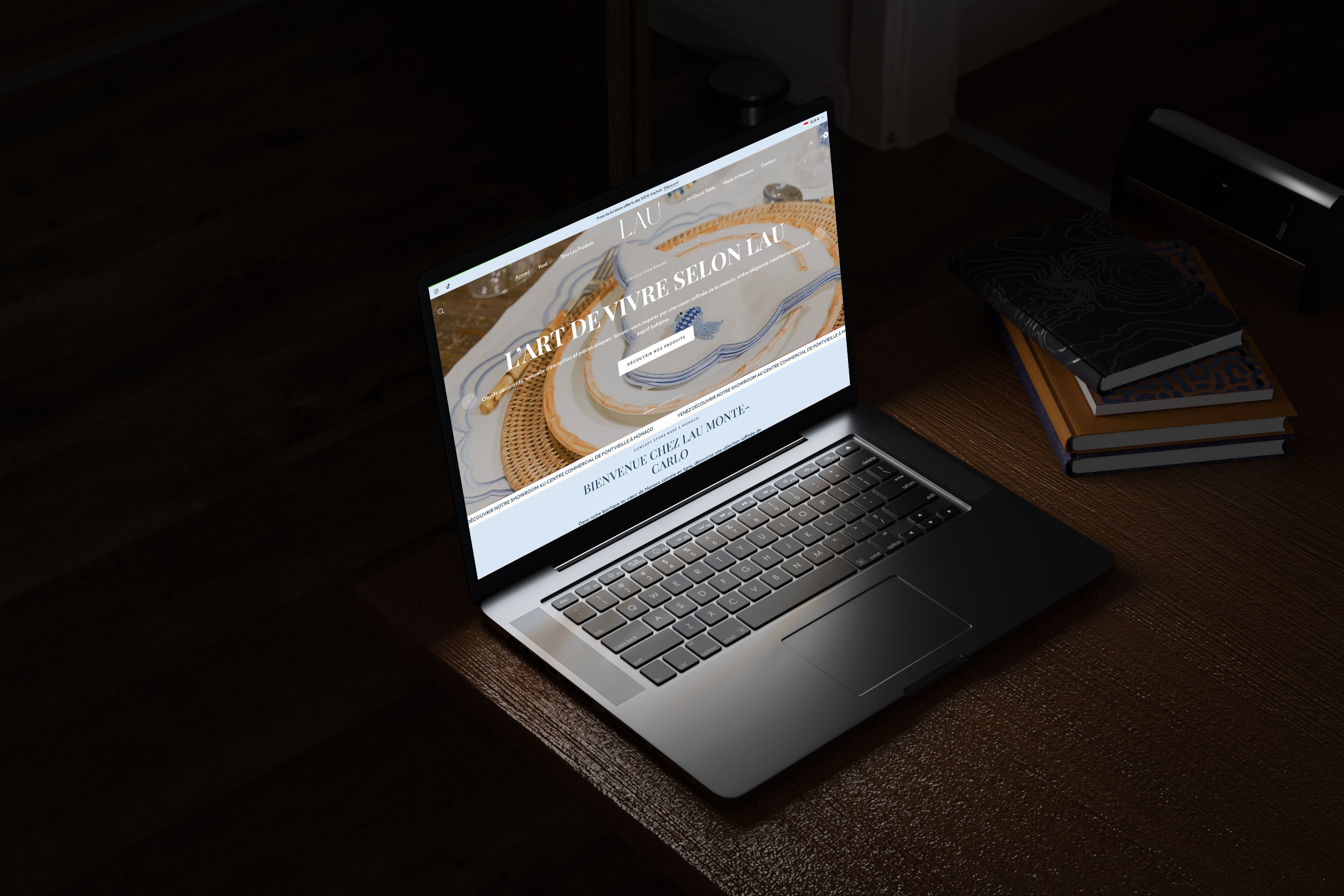
Website Copywriting for Monaco Brands
How Monaco businesses should write website copy: tone for a discreet clientele, proof over adjectives, four languages, SEO, AI search and review.
Most Monaco websites don't fail on design. They fail on words. The photography is beautiful, the layout is clean, and then the homepage opens with "Excellence, discretion and passion since 2005" — a sentence that could belong to any of a hundred firms between Fontvieille and Larvotto. A visitor who cannot tell within ten seconds what you do, for whom, and why you rather than the firm next door will leave, however good the pictures are.
Copy is also the part of a website that owners most often write themselves, at the last minute, in one language, and then have translated. This guide covers how to do it properly.
Start with the decision your visitor is trying to make
Before writing a line, list the three or four questions a serious prospect has when they land on your site. For a property agency: do you handle the type of property I'm looking for, do you know the off-market stock, and how do you work with buyers who aren't resident yet? For a yacht management company: which yacht sizes, which flags, what does your fee cover?
Every key page should answer those questions in plain words, near the top. "We manage motor yachts from 30 to 60 metres, under any flag, from our office in Port Hercule" does more work than three paragraphs about passion. Specific nouns, numbers and places beat adjectives every time.
A useful test: cover your logo and read the first screen of your homepage. If a competitor could put their logo there without changing a word, the copy isn't doing its job.
Write for a discreet, time-poor clientele
Monaco audiences are international, well advised and used to being sold to. That changes the tone that works.
- Understatement over superlatives. "World-class", "unparalleled" and "exclusive" have been worn smooth. Calm, precise language reads as more confident.
- Proof over promises. Years of activity, the number of transactions or clients handled, accreditations, the languages your team speaks, named partners where they agree to it. Only use figures you can stand behind.
- Discretion as a feature. In private wealth, family offices and high-end real estate, saying clearly how you protect client confidentiality is a selling point. Don't publish client names or recognisable cases without written consent.
- Short paragraphs. Many visitors read on a phone between meetings. Two or three sentences per paragraph, descriptive subheadings, and one clear next step per page.
One message, four languages — not one text translated three times
A typical Monaco business needs English and French at minimum, and often Italian and German, sometimes Russian or Arabic. The common mistake is to write in one language and run the rest through a translation tool or a generalist translator.
The result is usually correct and lifeless. Formality differs (French and German clients often expect vous and Sie throughout; Italian copy can be warmer), idioms don't travel, and search terms differ by language: an Italian buyer searches for "appartamento Monaco vista mare", not a literal translation of your English keyword.
Better practice is to agree a short message brief — positioning, three key proof points, tone, the terms you always or never use — and have each language written or adapted by a native speaker who works from that brief. Our multilingual website projects are set up this way, with a glossary so service names stay consistent across languages.
Write for search engines and AI assistants without writing for robots
Google and AI assistants such as ChatGPT, Gemini and Perplexity increasingly summarise answers rather than send visitors straight to pages. They tend to quote pages that state facts clearly: what the service is, where it's offered, for whom, at roughly what scope.
That rewards the same habits good copy needs anyway:
- One page per core service, with a heading that names it in the words clients use.
- A short, factual opening paragraph that a machine could quote accurately.
- A FAQ section answering real questions you get by phone or email.
- Consistent business details (name, address, phone, opening hours) across your site and your Google Business Profile.
Keyword stuffing, invented location pages and AI-generated filler work against you: they dilute the page and make the brand sound generic. For the technical side, see our SEO services.
Be careful with claims that carry legal weight
Copy is where businesses unintentionally make promises. A few areas deserve extra care in Monaco:
- Regulated activities. Financial, real estate, medical and legal services have their own rules on what can be advertised. Have your copy checked against your sector's obligations by your compliance adviser or professional body.
- "Guaranteed" results, "best in Monaco", "number one". Avoid comparative or absolute claims you can't document.
- Environmental claims. Words like "sustainable" or "carbon neutral" increasingly need evidence, particularly if you sell to EU customers.
- Personal data. If a form, testimonial or case study involves personal data, Monaco's Law No. 1.565 applies. The privacy notice should match what your site actually does.
None of this is legal advice — when in doubt, have a professional review the wording before launch.
A practical process that works
For most small and mid-sized Monaco businesses, a site of 8–15 pages can be written properly in a few weeks:
- Interview — one or two hours with the founder and the person who handles enquiries. The best phrases usually come from how they describe the business out loud.
- Message brief — positioning, audiences, proof points, tone, glossary. One or two pages, agreed before anyone writes copy.
- Page drafts in the lead language — written with the wireframes, not after the design is finished, so headings and buttons fit.
- Native adaptation into the other languages from the brief.
- Review by the people who will answer the phone, plus compliance review where needed.
- Measure and refine — once live, watch which pages convert and test headlines and calls to action. Small wording changes on key pages often move enquiry rates more than redesigns do; that's the core of conversion rate optimisation.
AI tools can help with structure, first drafts and variations, but the facts, the tone and the final say should stay with someone who knows the business and the market.
Words are part of the design
Good copy belongs in the project from day one, not poured into a finished template. When we build a website for a Monaco business, the message brief comes before the mood board, because the layout should be shaped around what you need to say.
If your current site looks right but doesn't bring in the enquiries it should, the words are the first place to look. Get in touch and we'll review your key pages and tell you plainly what we'd change.
Related services